
Every business comes with risk. In industrial and construction sectors, that risk is so often physical and immediate. But across all businesses, there are strategic, financial, operational and compliance risks that can affect outcomes just as significantly.
ISO 31000 marks the international standard that provides a structured, consistent approach to managing all of it. This article covers what ISO 31000 risk management is, how it’s structured, what adopting it really brings to your organisation and how technology can help in the day-to-day application.

What is ISO 31000 risk management?
ISO 31000 is an international standard developed by the International Organisation for Standardisation (ISO) that provides principles and generic guidelines for managing any type of risk. The current version, ISO 31000:2018, builds on the earlier 2009 standard with more of a focus on leadership integration and continual improvement.
The part that makes it worth understanding is what ISO 31000 is not. It is not a compliance standard. Businesses cannot be certified against it and regulators do not mandate it directly. Instead, it provides a framework and set of principles that organisations can apply to any risk, in any context, at any scale.
If you’re a small construction firm, a large manufacturing operation, or a mid-sized services business, ISO 31000 risk management can be applied across your entire organisation or within specific functions. It doesn’t prescribe a single method. It gives you a structured way to think about and manage uncertainty.
The three distinct pillars of ISO 31000
ISO 31000 is built around three core components: principles, a framework and a process. Understanding how they work together is how you apply it in the correct way.
The principles
The principles set out and define what good risk management looks like. They establish that risk management should be integrated into business processes rather than treated as a separate function and that it should be part of decision-making at every level. Key principles include being structured and comprehensive, customised to the organisation’s context, inclusive of stakeholder input and responsive to change.
The framework
The framework provides the structure for embedding risk management across the organisation. It covers leadership and commitment, integration into business processes, design of the risk management system, implementation, and evaluation and improvement. The framework requires genuine commitment from leadership to work. Without it, the process layer has nothing to sit on.
The process
The process is the operational layer. It describes how risk management is actually applied day to day. This includes establishing context, identifying risks, analysing and evaluating them against risk criteria, and treating them with appropriate controls. Communication, monitoring, and review run throughout. This is the part your workers interact with most directly.
These three components work together as one. The principles guide the values. The framework builds the structure. The process is what actually happens in practice.
What ISO 31000 implementation helps you achieve
Adopting an ISO 31000 approach doesn’t just give your risk management a better structure. It changes how your organisation thinks about uncertainty.
- Improved decision-making: When risk is embedded in how you make decisions, you’re not responding to problems after they happen. You’re factoring in what could go wrong before you commit to a course of action.
- Enhanced organisational resilience: ISO 31000 risk management helps businesses anticipate disruption, not just respond to it. That means better continuity, faster recovery and more confidence from stakeholders when things don’t go to plan.
- Cost savings and efficiency: Avoiding costly errors is cheaper than correcting them. A structured approach to risk means fewer surprises, better allocation of resources and less time spent firefighting.
- Increased stakeholder confidence: Clients, investors and regulators take risk management seriously. A structured, internationally-aligned approach demonstrates that your business is being run responsibly.
- Facilitating compliance: ISO 31000 is not a compliance standard itself, but the structured approach it provides makes it easier to meet regulatory requirements. It aligns well with Australian WHS legislation and complements occupational health and safety management systems such as ISO 45001.
ISO 31000 and ISO 45001: Understanding the relationship
ISO 31000 and ISO 45001 are related but they are different. ISO 45001 is a certifiable standard specifically focused on occupational health and safety management systems. It’s designed to help organisations reduce workplace injuries and ill health.
ISO 31000, on the other hand, addresses risk management on a level that’s broader. It applies to any type of risk across any function of an organisation, not just OHS. The two standards complement each other well. ISO 45001 provides the OHS-specific framework, while ISO 31000 offers the comprehensive risk management principles that can be applied across the whole business. Many organisations find value in aligning their approach to both.
Leveraging technology for modern-day risk management
ISO 31000 provides the principles and structure. Putting them into practice across a real business requires systems that can handle the operational load consistently.
That’s where a platform like WHS Monitor becomes relevant. Managing risks in the right way means having consistent processes for identifying and documenting hazards, conducting risk assessments, tracking controls, managing incidents and maintaining records that reflect the current state of risk across the business.
Without the right tools, these processes are manual, inconsistent and easy to let slip. WHS Monitor brings together the key functions that support a structured risk management approach:
- Risk management: Identify, assess, and control risks with a structured, repeatable process.
- Policies and procedures: Document and distribute your safety framework so it’s accessible to everyone.
- Audits and inspections: Verify your controls are working and capture findings before they become incidents.
- Incident management: Record, investigate and learn from incidents to prevent recurrence.
- Reporting: Monitor performance and identify trends with accurate, real-time data.
Make a strategic investment in your businesses future
Risk isn’t going away. Every decision your business makes carries some level of uncertainty. The question isn’t whether you’ll face risks. It’s whether you’re managing them with any kind of structure, or just dealing with them as they appear.
WHS Monitor’s business risk and crisis management module assists your organisation build the risk management structure required by ISO 31000. It helps businesses of all sizes move from reactive to proactive, from informal to systematic, and from guesswork to informed decision-making. Adopting this approach is a long-term investment. It builds resilience, supports compliance, and creates a foundation for more confident leadership.
If you’re looking to bring more structure to your risk management approach, WHS Monitor gives you the practical tools to make it work in practice. Contact our team today for a free demo.
Hazardous Chemical Register: Why It’s Essential for Workplace Safety
Everything you need to know about choosing the right HSEQ management system; from scoping your…
What is Health and Safety in the Workplace? A Comprehensive Guide
Everything you need to know about choosing the right HSEQ management system; from scoping your…

What Is the Work Health and Safety Act 2011? A Full Guide for Australian Employers
Everything you need to know about choosing the right HSEQ management system; from scoping your…

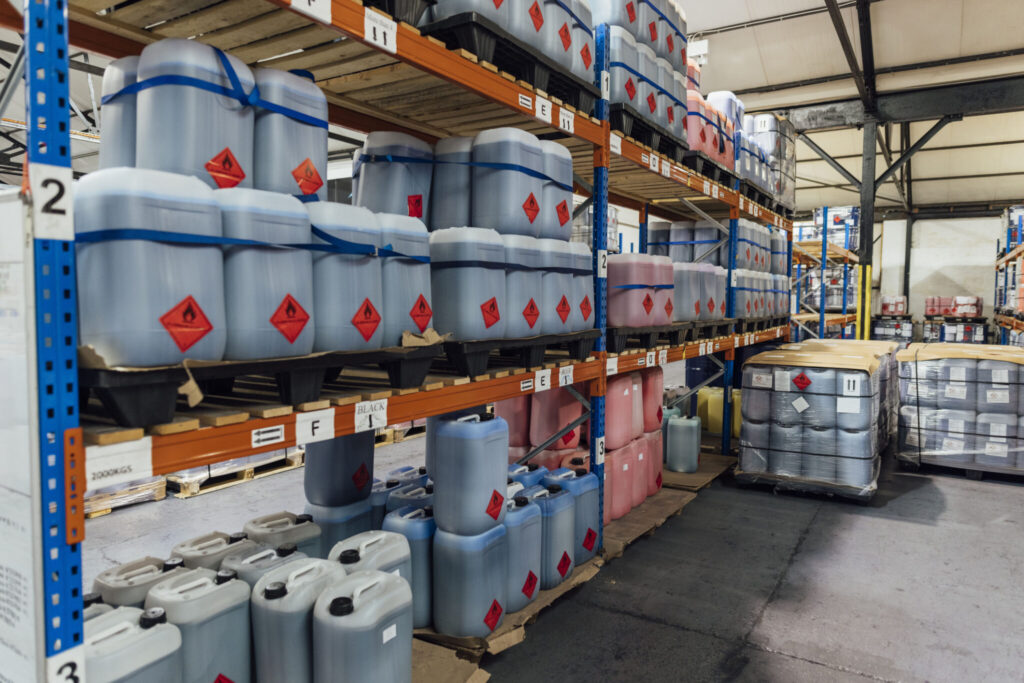
Many industrial, construction and business environments handle hazardous chemicals every working day. It might be cleaning agents, fuels, industrial solvents, or raw materials – whatever it is, these substances are part of the job. But handling them safely isn’t just about common sense. A structured approach to chemical management is needed, one that protects workers and keeps your business on the right side of the law.
At the centre of that approach is the hazardous chemical register. Understanding what it is, what goes into it and why it really matters could be the difference between a safe, compliant operation and a serious incident.
What are chemical hazards in the workplace?
A chemical hazard is any solid, liquid, or gas that has the potential to cause harm to people or property. That covers a lot of ground. In the wrong conditions, even substances used in everyday operations can become dangerous.
The types of harm they can cause fall into a few categories:
- Acute health effects: These happen quickly after exposure. Think burns, poisoning, eye irritation, or respiratory distress.
- Chronic health effects: These develop over time. Long-term exposure to certain chemicals can lead to serious conditions, including occupational asthma, respiratory disease, or cancer.
- Physical hazards: Some chemicals create fire risks, explosion hazards, or cause corrosion to equipment and infrastructure.
Recognising these risks isn’t optional for decision-makers in industrial and construction businesses; it’s part of your duty of care.
What is a hazardous chemical register?
A hazardous chemical register is a comprehensive list of all hazardous chemicals that are stored, handled, or used at a workplace. It doesn’t matter whether those chemicals are used daily or kept in a storage room. If they’re on site, they belong on the register.
The purpose is straightforward. Workers and emergency services need to be able to access critical safety information quickly. In an emergency, knowing exactly what chemicals are present, where they are stored, and how to respond can be enough to prevent a dangerous situation from becoming much worse.
Under Australian workplace health and safety legislation, any business that stores, handles, or uses hazardous chemicals is legally required to prepare, maintain and provide access to a hazardous chemical register. You can’t view this as a simple box-ticking exercise. This is a legal obligation, and one that regulators take seriously.
Safe Work Australia provides comprehensive guidance on hazardous chemical records and signs in workplaces. State regulators including WorkSafe Queensland and WorkSafe WA also offer jurisdiction-specific guidance on what is required.
The integral role of safety data sheets (SDS)
The hazardous chemical register doesn’t stand alone. For every chemical listed, the register must include the current safety data sheet (SDS).
An SDS is a document provided by the manufacturer or supplier that details everything workers and emergency responders need to know about a particular chemical. It covers:
- Hazardous properties, including flammability, toxicity, and reactivity
- Safe handling and storage instructions
- Emergency procedures, including spill clean-up, first aid, and firefighting guidance
- Personal protective equipment (PPE) requirements
An SDS that is outdated or missing is not just a compliance gap. It puts workers at risk. SDS updating needs to be a regular part of your chemical management process. When a supplier revises an SDS, your register needs to be a reflection of that change.
WHS Monitor’s chemical management module makes this much easier. Maintain a live, accurate register with usable chemical data including, quantity stored, storage information, automatic segregation alerts, quick reference hazard and PPE charts as well as auditable SDS documents. This ensures your team always has access to the right information to keep your records audit-ready.
Keeping your hazardous chemical register accurate
A hazardous chemical register is only as useful as its accuracy. There are a few clear best practices that keep it working the way it should.
Always keep the register current. Any time a new chemical is introduced to the workplace, it must be added before use. When a chemical is removed or replaced, update the register to reflect that.
Make it accessible. The register must be available to all workers and emergency personnel at all times. A digital register accessible from any device is far more practical than a folder in the safety manager’s office.
Review it regularly. Don’t wait for something to go wrong. Set a schedule for routine reviews, particularly after any changes to operations, suppliers, or products.
Connect it to your broader risk management approach. The hazardous chemical register and the SDS documents within it feed directly into risk assessments. The information they contain helps identify what control measures are needed and whether current controls are adequate. Without an accurate register, you cannot conduct a thorough risk assessment. Without a thorough risk assessment, your control measures are guesswork.
Stay committed to chemical safety
A well-maintained hazardous chemical register is one of the foundations of chemical safety in any workplace. It protects workers, supports emergency responders and demonstrates to regulators that your business takes its obligations seriously.
Getting this right requires consistency. That means keeping your register current, keeping SDS documents up to date and making access as easy as possible.
WHS Monitor’s chemical management solution brings together hazardous chemical registers, automatic SDS updates, chemical risk, chemical segregation and a proprietary chemical mixing tool into one comprehensive module. WHS Monitor also allows registers to be easily accessed by all personnel, without the need for sign in, by scanning QR and NFC enabled Q-Tap digital labels attached to each cemical storage. If you’re looking to simplify your chemical management processes, contact our team today for a free demo.
This is a question that comes up more often than you’d expect. What exactly is health and safety in the workplace? And what does it actually mean for your business?
The short answer is that it’s something beyond legal compliance. At its core, health and safety in the workplace is about protecting people. Your workers, your contractors, your visitors, and yes, your business itself. Done well, it shapes the culture, the confidence and the long-term performance of any organisation.
This guide breaks down what health and safety actually involves, why it matters for decision-makers in industrial, construction, and business environments, and what a strong WHS framework looks like in practice.

Clearly defining health and safety in the workplace
Health and safety in the workplace refers to the discipline concerned with protecting the health, safety, and welfare of people engaged in work or employment. That’s the comprehensive definition, but it’s one that covers a wide range of ground so let’s separate it into two components.
Health is all about preventing work-related illness and long-term harm. Respiratory conditions from chemical exposure, hearing loss from prolonged noise, musculoskeletal injuries from repetitive tasks, and psychological harm from workplace stress all fall under this category.
Safety shifts the focus to preventing injuries, accidents and immediate physical harm. Slips, falls, machinery accidents, cuts, burns and crush injuries are the kinds of incidents a strong safety system is put in place to prevent.
Both are equally important. A business that focuses only on preventing acute injuries but ignores long-term health risks is doing half the job, so a holistic approach is always the most effective.
Why health and safety matters for your business
This might seem obvious, but there’s a lot more to this than you might initially think. There’s a tendency to treat WHS as a compliance burden. Something you do because you have to, not because it actually delivers value. That’s the wrong way to look at it. The benefits of strong health and safety in the workplace go well beyond avoiding fines:
- Legal compliance: Businesses in Australia have clear obligations under work health and safety legislation. Meeting those obligations protects you from penalties, investigations, and legal action.
- Employee wellbeing: Your workers are your most valuable asset. A workplace that keeps them safe and healthy retains their trust and their capability.
- Productivity and efficiency: Fewer incidents mean less downtime. When people aren’t dealing with injuries, investigations, or recovery periods, they’re working.
- Financial savings: Workplace incidents are expensive. Compensation claims, legal costs, insurance premiums, and the cost of replacing injured workers add up quickly.
- Reputation and trust: Clients, partners, and prospective workers pay attention to safety records. A strong safety culture builds confidence in your business.
- Morale and retention: Workers stay in places where they feel safe. High turnover is often a symptom of a poor safety culture, not just low pay.
These aren’t abstract benefits. They show up in your bottom line, your staff headcount and your ability to win and maintain the important contracts.
Building a robust health and safety framework
Knowing what health and safety in the workplace means is one thing. Building a system that actually delivers it is another. Effective WHS management requires several components working together.
Risk management
Risk management is the foundation. This means identifying hazards across physical, chemical, ergonomic, biological, and psychological categories, assessing the likelihood and severity of harm, and then implementing control measures to eliminate or reduce those risks. Without systematic risk management, everything else is reactive.
Policies and procedures
Clearly defined safety policies set expectations across the business, and documented safe work procedures ensure tasks are performed the right way, every time. Workers shouldn’t have to guess what the safe approach is. It should be written down and accessible.
Training and competence
Knowing the rules and being able to follow them in practice are not the same thing. Workers need training that is relevant to their role, their environment, and the specific hazards they face. Regular refresher training keeps that knowledge current and prevents it from drifting.
Consultation and participation
Workers who are involved in safety decisions are more invested in the outcomes. Establishing health and safety representatives or safety committees is a practical way to bring workers into the process. Their on-the-ground knowledge often surfaces risks that managers miss.
Incident management
Clear procedures for reporting and investigating incidents are essential, but so is learning from them. An incident is data. If you’re not using it to prevent the next one, you’re wasting an opportunity. Timely and accurate incident management also helps you meet notification obligations under WHS legislation.
Audits and inspections
Regular audits and inspections verify that your systems and controls are actually working, not just documented. They help identify gaps before they result in an incident, and they provide evidence of due diligence that can be critical if your safety practices are ever scrutinised.
Reporting
Accurate records of incidents, training, risk assessments, and audits and inspections paints a clear picture of how your safety system is performing over time. They’re also essential for demonstrating compliance if you’re ever subject to investigation.
The role you play as a decision-maker in health and safety
Health and safety in the workplace doesn’t start on the shop floor. It starts right at the top and permeates down.
As an employer or decision-maker, your responsibilities include providing a safe work environment, ensuring workers have the training and supervision they need, allocating adequate resources to safety, and building a culture where safety is treated as a genuine priority. When leadership takes it seriously, workers follow. When they don’t, no amount of policy writing compensates.
WHS Monitor gives decision-makers the tools to make all of this manageable in practice. From risk management and incident management to audits and inspections, reporting, policies and procedures, people management and most importantly reporting, keeping everything you need in one platform removes the friction that leads to obstacles.
Investing in a safer workplace for all
You can’t think of a strong health and safety culture in the workplace as an expense. It’s an investment in your people, your productivity and your reputation.
Businesses that take WHS seriously perform better. They retain workers, avoid costly incidents and naturally build the kind of trust that supports long-term growth. The ones that treat it as a grudging compliance exercise tend to find out the hard way why it matters.
If you’re looking at your current safety practices and thinking there’s room to improve, contact WHS Monitor today for a free demo and see how our platform can support a safer, more compliant workplace.

Login to your Account