
Many industrial, construction and business environments handle hazardous chemicals every working day. It might be cleaning agents, fuels, industrial solvents, or raw materials – whatever it is, these substances are part of the job. But handling them safely isn’t just about common sense. A structured approach to chemical management is needed, one that protects workers and keeps your business on the right side of the law.
At the centre of that approach is the hazardous chemical register. Understanding what it is, what goes into it and why it really matters could be the difference between a safe, compliant operation and a serious incident.
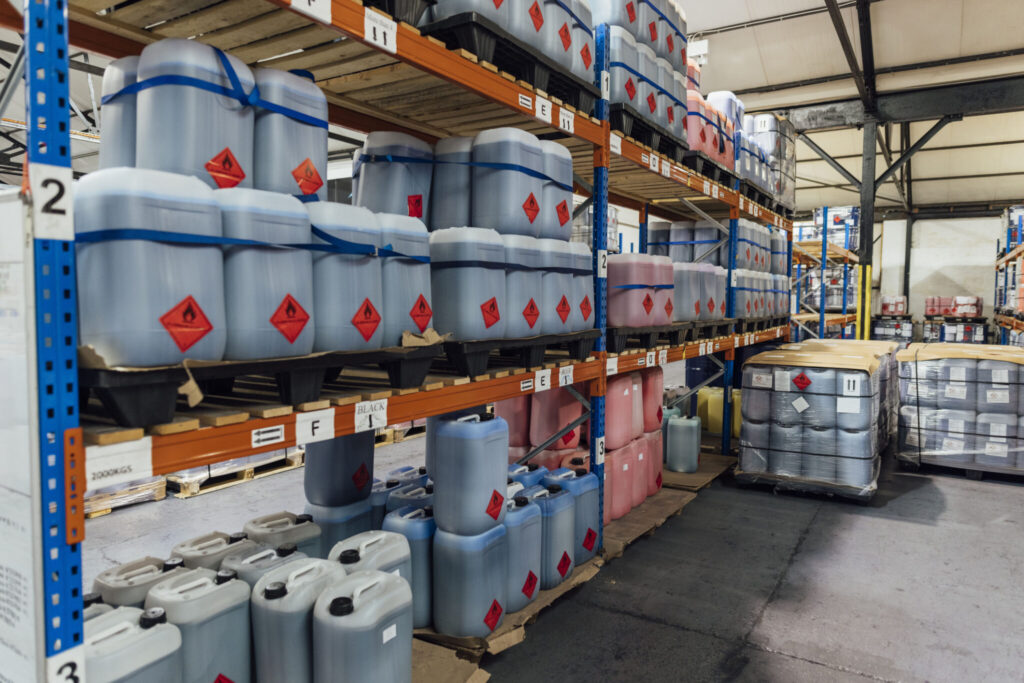
What are chemical hazards in the workplace?
A chemical hazard is any solid, liquid, or gas that has the potential to cause harm to people or property. That covers a lot of ground. In the wrong conditions, even substances used in everyday operations can become dangerous.
The types of harm they can cause fall into a few categories:
- Acute health effects: These happen quickly after exposure. Think burns, poisoning, eye irritation, or respiratory distress.
- Chronic health effects: These develop over time. Long-term exposure to certain chemicals can lead to serious conditions, including occupational asthma, respiratory disease, or cancer.
- Physical hazards: Some chemicals create fire risks, explosion hazards, or cause corrosion to equipment and infrastructure.
Recognising these risks isn’t optional for decision-makers in industrial and construction businesses; it’s part of your duty of care.
What is a hazardous chemical register?
A hazardous chemical register is a comprehensive list of all hazardous chemicals that are stored, handled, or used at a workplace. It doesn’t matter whether those chemicals are used daily or kept in a storage room. If they’re on site, they belong on the register.
The purpose is straightforward. Workers and emergency services need to be able to access critical safety information quickly. In an emergency, knowing exactly what chemicals are present, where they are stored, and how to respond can be enough to prevent a dangerous situation from becoming much worse.
Under Australian workplace health and safety legislation, any business that stores, handles, or uses hazardous chemicals is legally required to prepare, maintain and provide access to a hazardous chemical register. You can’t view this as a simple box-ticking exercise. This is a legal obligation, and one that regulators take seriously.
Safe Work Australia provides comprehensive guidance on hazardous chemical records and signs in workplaces. State regulators including WorkSafe Queensland and WorkSafe WA also offer jurisdiction-specific guidance on what is required.
The integral role of safety data sheets (SDS)
The hazardous chemical register doesn’t stand alone. For every chemical listed, the register must include the current safety data sheet (SDS).
An SDS is a document provided by the manufacturer or supplier that details everything workers and emergency responders need to know about a particular chemical. It covers:
- Hazardous properties, including flammability, toxicity, and reactivity
- Safe handling and storage instructions
- Emergency procedures, including spill clean-up, first aid, and firefighting guidance
- Personal protective equipment (PPE) requirements
An SDS that is outdated or missing is not just a compliance gap. It puts workers at risk. SDS updating needs to be a regular part of your chemical management process. When a supplier revises an SDS, your register needs to be a reflection of that change.
WHS Monitor’s chemical management module makes this much easier. Maintain a live, accurate register with usable chemical data including, quantity stored, storage information, automatic segregation alerts, quick reference hazard and PPE charts as well as auditable SDS documents. This ensures your team always has access to the right information to keep your records audit-ready.
Keeping your hazardous chemical register accurate
A hazardous chemical register is only as useful as its accuracy. There are a few clear best practices that keep it working the way it should.
Always keep the register current. Any time a new chemical is introduced to the workplace, it must be added before use. When a chemical is removed or replaced, update the register to reflect that.
Make it accessible. The register must be available to all workers and emergency personnel at all times. A digital register accessible from any device is far more practical than a folder in the safety manager’s office.
Review it regularly. Don’t wait for something to go wrong. Set a schedule for routine reviews, particularly after any changes to operations, suppliers, or products.
Connect it to your broader risk management approach. The hazardous chemical register and the SDS documents within it feed directly into risk assessments. The information they contain helps identify what control measures are needed and whether current controls are adequate. Without an accurate register, you cannot conduct a thorough risk assessment. Without a thorough risk assessment, your control measures are guesswork.
Stay committed to chemical safety
A well-maintained hazardous chemical register is one of the foundations of chemical safety in any workplace. It protects workers, supports emergency responders and demonstrates to regulators that your business takes its obligations seriously.
Getting this right requires consistency. That means keeping your register current, keeping SDS documents up to date and making access as easy as possible.
WHS Monitor’s chemical management solution brings together hazardous chemical registers, automatic SDS updates, chemical risk, chemical segregation and a proprietary chemical mixing tool into one comprehensive module. WHS Monitor also allows registers to be easily accessed by all personnel, without the need for sign in, by scanning QR and NFC enabled Q-Tap digital labels attached to each cemical storage. If you’re looking to simplify your chemical management processes, contact our team today for a free demo.


Login to your Account